
Chase County Court Record Requests
Start with Kansas CaseSearch, which posts public case information along with any documents released online. Not everything shows up there. When a record is missing, try the courthouse terminal or District Court Clerk Jenna Gibb. Her office sits on the second floor at 300 Pearl Street in Cottonwood Falls. Mail goes to P.O. Box 529. Call 620-273-6319 or fax 620-273-6890. Hours run Monday through Friday, 8:00 a.m. to noon and 1:00 p.m. to 5:00 p.m.
Be specific in the request. Give the Chase County case number. Add the document title or docket entry, plus a date range. Say whether you want an electronic or paper copy, plain or certified. Ask for a cost estimate before any large reproduction. A targeted request tied to a known court file works far better. A broad demand for everything about a person will not.
- Search public case information and note the full case number.
- Identify each entry or filed document sought.
- Choose email, mail, pickup, or fax as the preferred response.
- Send the request to the District Court custodian.
- Review the estimate and clarify certification needs.
Case Information Is Not the File
Kansas court guidance draws a line between case information and court records. Case information covers the number and case type. It also lists parties, attorneys, judge, hearing dates, and the index of events. The records are the actual documents filed in the case. So a docket line reading Motion, Judgment, or Journal Entry proves the event was recorded. But it does not hand you every page behind that event.
| Item | What it provides | Where to start |
|---|---|---|
| Case information | Identifiers, roles, dates, and status | CaseSearch |
| Events index | Chronological filing and action list | CaseSearch or terminal |
| Filed document | The motion, order, judgment, or notice | Online image, terminal, or clerk |
| Certified copy | A clerk-authenticated reproduction | District Court Clerk |
That distinction stops a common mistake. A calendar setting called Sentencing does not prove the sentence, and a docket entry labeled Judgment may not be the complete judgment.
Kinds of Court Records
Public Chase County court records can include pleadings, motions, orders, journal entries, judgments, notices, unrestricted exhibits, and docket entries. What you get depends on the case type. It also turns on the document type, the system date, and access rules. One caveat deserves care. A civil information sheet used to open some civil matters is administrative and nonpublic, kept separately. So do not request it as though it were a public pleading.
Limits vary by matter. Criminal, civil, family, probate, mental-health, juvenile, and traffic cases each carry their own rules. Juvenile and Child in Need of Care records face heavy restriction. Adoption, expunged, grand-jury, and certain criminal-investigation materials stay unavailable under the Kansas guidance. And a public docket entry does not make its attachments public too.
Chase Courthouse Terminal Access
Kansas Supreme Court Rule 22 makes each district court keep a public terminal. At that terminal you may find public case information and court records. The online portal does not offer some of these. The exact spot inside the Chase courthouse is not published. So ask the clerk when you arrive.
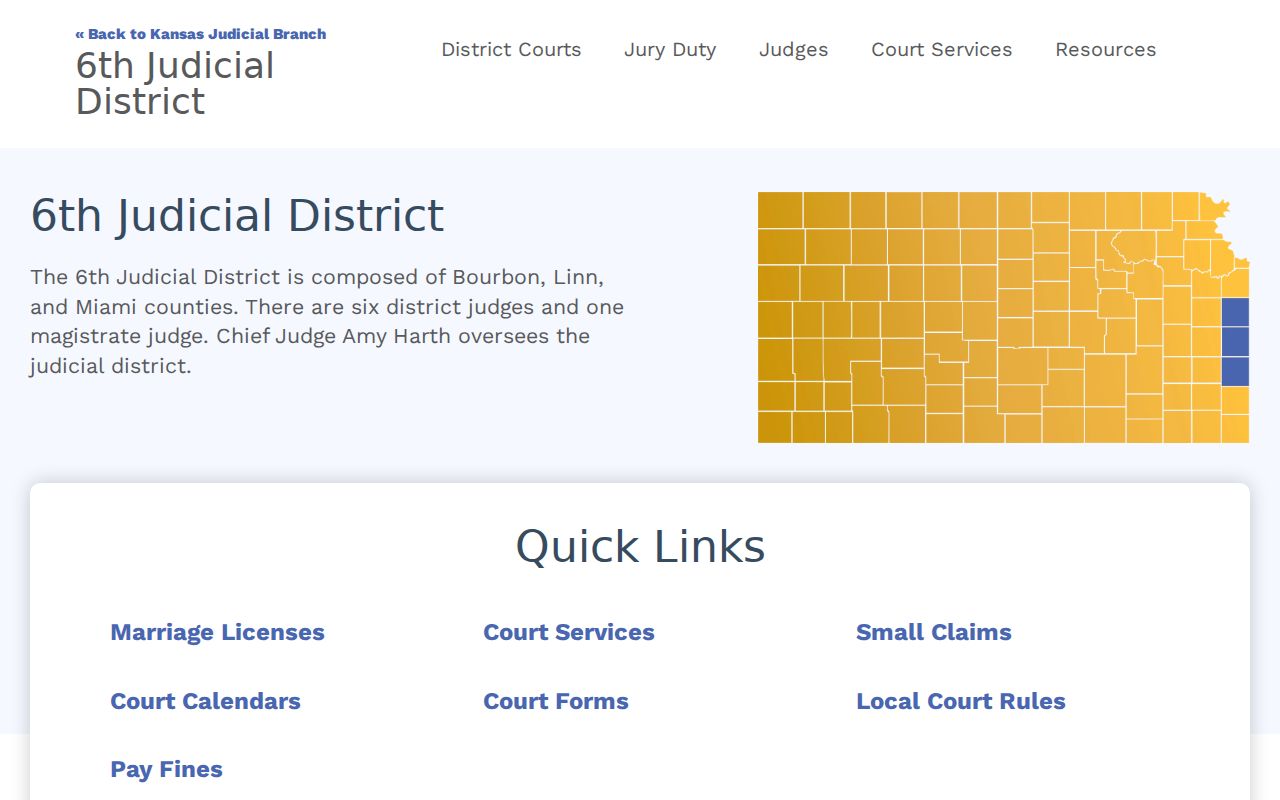
The official district court records page lays out this online-versus-terminal distinction.
The terminal broadens what you can reach, but it never opens a sealed or nonpublic file.
Online absence is not proof of nonexistence. Check the terminal or ask the Chase County District Court Clerk about the specific record.
Court Records: What They Contain
A filed document carries its own text, signatures, stamps, and attachments, subject to redaction. The docket gives the timeline around it. Read together, they show what was requested, what the court ordered, and when each action happened. Still, a planned setting is not an outcome. An event label is not the document itself.
- Docket
- The chronological register of filed papers, court actions, orders, and settings.
- Redaction
- Masking protected information while leaving a separable public portion available.
- Certified copy
- A copy authenticated by the clerk.
- Disposition
- The recorded resolution of a charge or case.
- Sealed
- Restricted under statute, rule, order, or a case-specific decision.
Request a document by its docket date and title whenever you can. That helps staff tell a motion apart from the later order that ruled on it.
The Current Chase KORA Form
The Judicial Branch's Kansas Open Records Act Request Form for Court Records is dated February 6, 2026. Check the county District Court option. Write Chase County District Court. You will supply name, mailing address, city, state, ZIP, phone, fax, email, and preferred delivery method. Add a specific record description, signature, and date. The form also carries a certification against prohibited commercial use under K.S.A. 45-230.
No Chase-specific email, fixed turnaround, per-page price, or ID rule appears on the form. Deliver it to the proper court custodian. Then use the local clerk contact to confirm it arrived. The County Clerk's KORA route handles county government records. It is not automatically the custodian for District Court case files.
| Court | Choose county District Court and write Chase County. |
|---|---|
| Records requested | Give case number, documents, entries, and dates. |
| Delivery | Email, mail, pickup, or fax. |
| Estimate | The custodian records expected reproduction cost. |
| Certification | Sign the K.S.A. 45-230 noncommercial-use statement. |
Copy Fees and Certification
Chase County publishes no complete current fee table. It does not cover every plain page, electronic copy, certification, exemplification, or archived reproduction. Do not assume a portal download, a photocopy, and a certified record all cost the same. The KORA form includes an estimated reproduction cost field. County guidance says the custodian may state when, how, and at what cost a record will be provided.
A free online result may answer a simple date question. A legal or administrative purpose may call for a certified copy instead. Tell the clerk the format you need and ask for an estimate. Note that Central Payment Center convenience fees apply to payments. They do not apply to court-record copy or certification fees.
Older Chase County Court Records
Kansas Rule 108 sets the rules for how court records are kept and copied. It also covers indexing and eventual disposal. An old Chase County case may still exist on paper, in an archive, or as a later reproduction. The file can survive even when nothing appears as an online image. Check CaseSearch first. Then ask the clerk when Chase County joined the statewide eCourt system. Also ask which older formats remain available for a case docket lookup.
The courthouse built in 1873 shows how deep Chase County court history runs. It does not guarantee that a searchable database holds some nineteenth-century register. When you contact the clerk, give a name, a rough year, the case type, and any known case number. Also ask whether you need a current electronic reproduction, the paper file, an archived record, or a certified copy.
eFlex Files, CaseSearch Reveals
Kansas eFlex is the e-filing portal for attorneys. New cases and later documents go in through it. Kansas attorneys governed by Supreme Court filing rules work that way. The public cannot browse court records in eFlex, though. For a public case lookup, the options stay CaseSearch, the courthouse terminal, and the clerk. The official eFlex page shows the filing role a user holds.
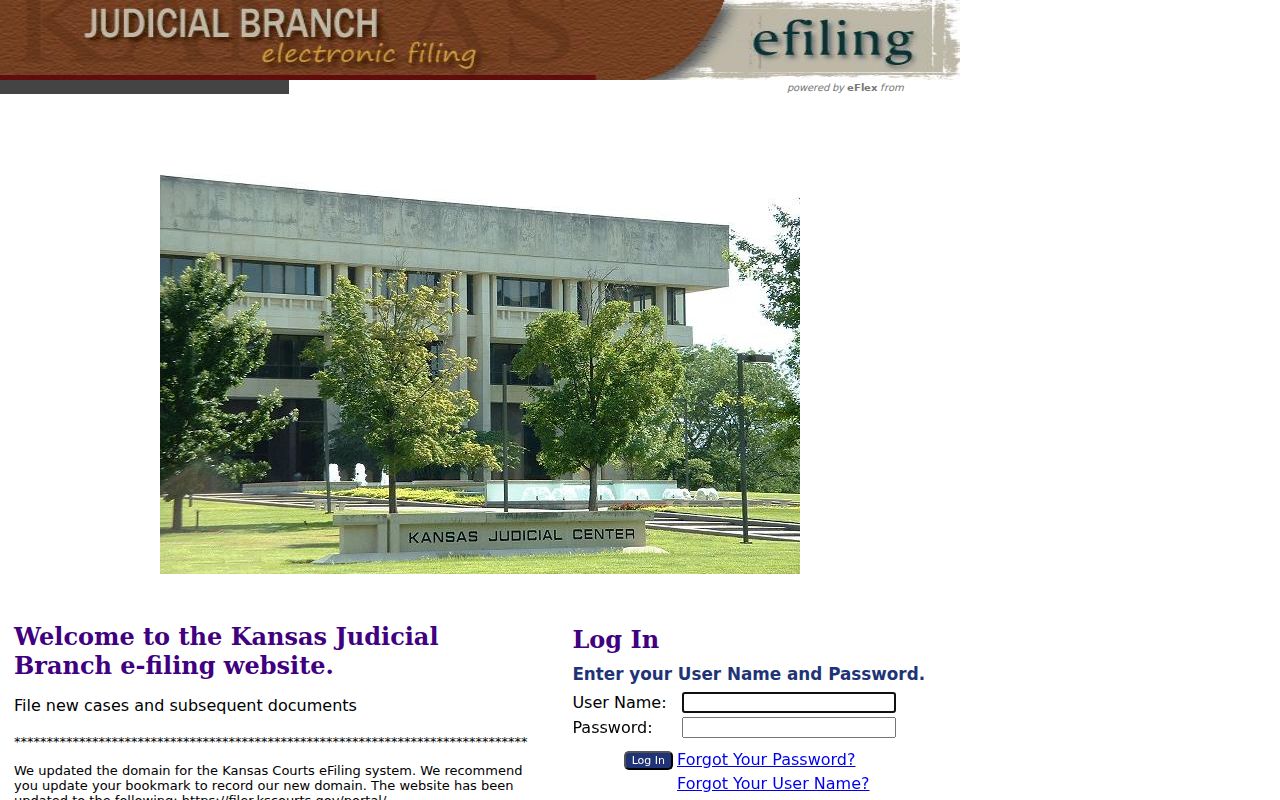
The filing portal is about how records enter the court system, not how the public reads them.
Access Rules for Court Records
Chase County court records follow a set of access rules worth knowing. K.S.A. 45-216 opens with a policy that favors inspection of public records. K.S.A. 45-218 governs how inspection and responses work, and K.S.A. 45-220 backs a written, identifiable request. Under K.S.A. 45-221, some records are exempt, and protected parts may be withheld while a separable public part is released when practical. Court rules and sealing orders apply too.
A seal cannot be bypassed by a records request. Nonpublic records stay unavailable online and at the terminal alike. When material is withheld, the response may point to the exemption or restriction that governs it. To reach a sealed record, a person must follow the court procedure that applies to that record rather than treating KORA as a shortcut.
Note: Confirm every copy and docket fact with the Chase County District Court Clerk, because public portal information is not the official record.
Choose the Chase Record Custodian
Chase County has more than one record custodian. District Court case files belong with the District Court Clerk. They do not belong with the Chase County Clerk, who keeps county-government records instead. A Cottonwood Falls municipal citation or ordinance case starts in the city court. Federal matters go to the U.S. District Court for the District of Kansas rather than Kansas CaseSearch. Naming the right court from the start prevents delay. It also helps staff find the correct docket series.
Put the request in writing. Identify Chase County District Court, the case number, the docket entries or documents you want, and a date range. The current KORA court form also asks for contact details, a preferred response route, a signature, and a date. It asks for a certification under K.S.A. 45-230 about prohibited commercial use. It does not ask for a Social Security number or birth date. Skip sensitive identifiers unless the custodian lawfully requests one.
Redacted Chase Records Still Have Value
K.S.A. 45-221 allows exemptions. But a custodian can separate a public portion from protected material when practical. So a released order may arrive with blacked-out names, addresses, or facts. Its public ruling stays intact, though. Redaction is not the same as sealing the whole case. And when a document image is unavailable, the events index can still tell you plenty. It covers the court docket's events.
If a response comes back partial, compare the disclosed pages with the docket entry. Then ask which statute, rule, or order controls the withheld part. Do not assume the courthouse terminal will show more. Rule 22 keeps nonpublic records unavailable both online and at the public terminal.